
Quick answer: For a dumpster rental for roof replacement, choose by weight, not by how much space you think you need. Old shingles are some of the heaviest debris there is, so a trailer can hit its weight limit long before it looks full. For most full tear-offs in Pasco County, our 20-yard dumpster with 4 tons included is the safe pick. Park it right next to the house, keep tarps ready, and plan around Florida's rainy season.
A roof replacement is one of the biggest projects a Florida homeowner takes on. Whether you're hiring a roofer or tackling a small shed or porch roof yourself, the debris plan matters. Get it right and the tear-off goes fast. Get it wrong and you're paying for a second haul or picking nails out of your lawn for weeks.
Here's what we've learned delivering dumpsters to roof jobs around New Port Richey, Holiday, and the rest of Tampa Bay.
Why Weight Matters More Than Volume on a Roofing Job
Most dumpster decisions come down to space: how many pickup-truck loads of junk do you have? Roofing is different.
Asphalt shingles are dense. They're made of fiberglass or felt, asphalt, and mineral granules, and they come off in compact, flat layers. A pile of shingles that looks small on the driveway can weigh more than a trailer full of old furniture.
That's why every Lupo size has a weight allowance built into the flat rate:
| Size | Dimensions | Weight included | Flat price | Good fit for |
|---|---|---|---|---|
| 10-yard | 12' L × 8' W × 3.5' H | 2 tons | $325 | Sheds, small porch or carport roofs |
| 15-yard | 14' L × 8' W × 4' H | 3 tons | $400 | Smaller homes, single-layer tear-offs |
| 20-yard | 16' L × 8' W × 5' H | 4 tons | $500 | Most full-house roof replacements |
Delivery, pickup, and disposal up to the weight limit are included in every price.
Things that add weight
A few details push a roofing load heavier than you'd expect:
- Multiple layers. Some older Florida homes have a second layer of shingles nailed over the first. Two layers means roughly twice the debris.
- Wet shingles. A summer downpour soaks into old shingles and felt. Wet debris weighs more than dry debris.
- Rotted decking. If the roofer finds soft plywood, that wood goes in the dumpster too.
- Tile or other heavy materials. If you're not sure what's on your roof, tell us when you call.
How to choose your roofing dumpster size
We won't give you a formula, because every roof is different. Instead, tell us:
- Roughly how big the house is and whether it's one story or two.
- How many layers of shingles are coming off.
- Whether any decking is being replaced.
- Whether anything else, like old gutters or a patio cover, is going in too.
With that, we can point you to the right size. If you're stuck between two, size up. One right-sized dumpster is almost always cheaper than a second haul. If your roofer is ordering the dumpster, ask them what they usually use on a house your size.
Placement: Get the Dumpster Close to the House
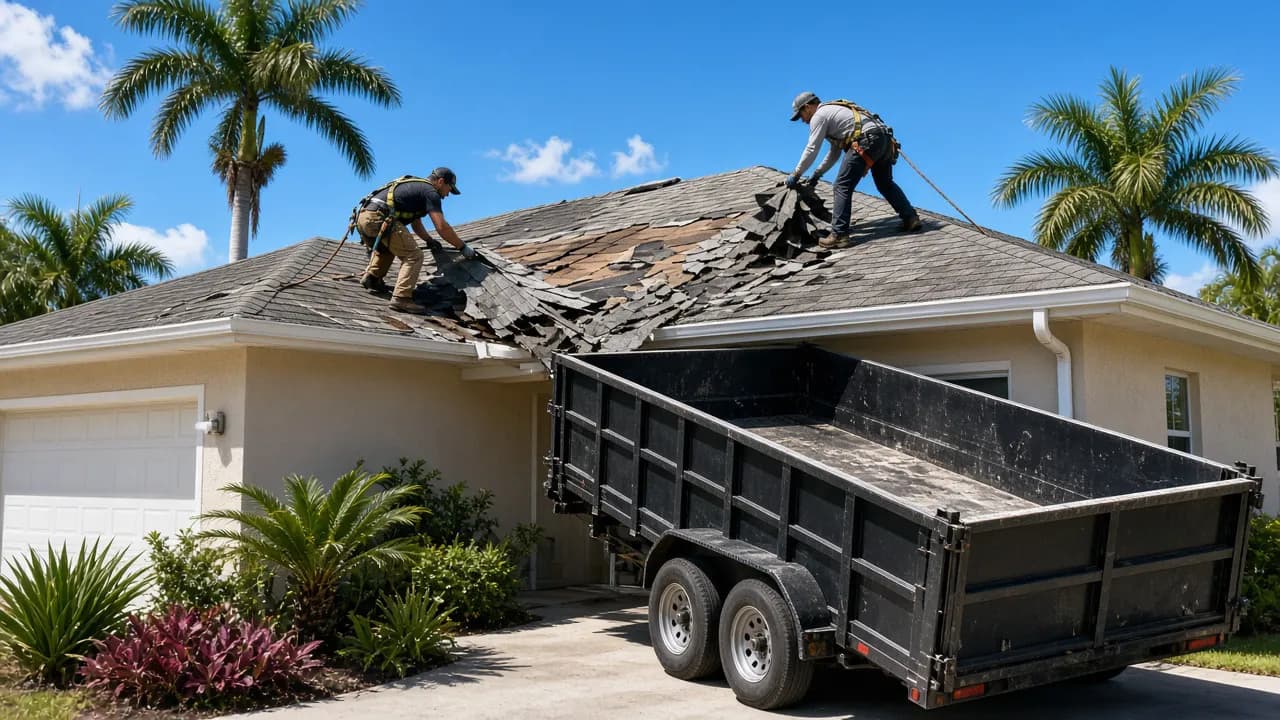
On a tear-off, the crew wants to drop shingles straight from the roof edge into the dumpster. Every extra step between the roof and the trailer is time and mess.
Good placement looks like this:
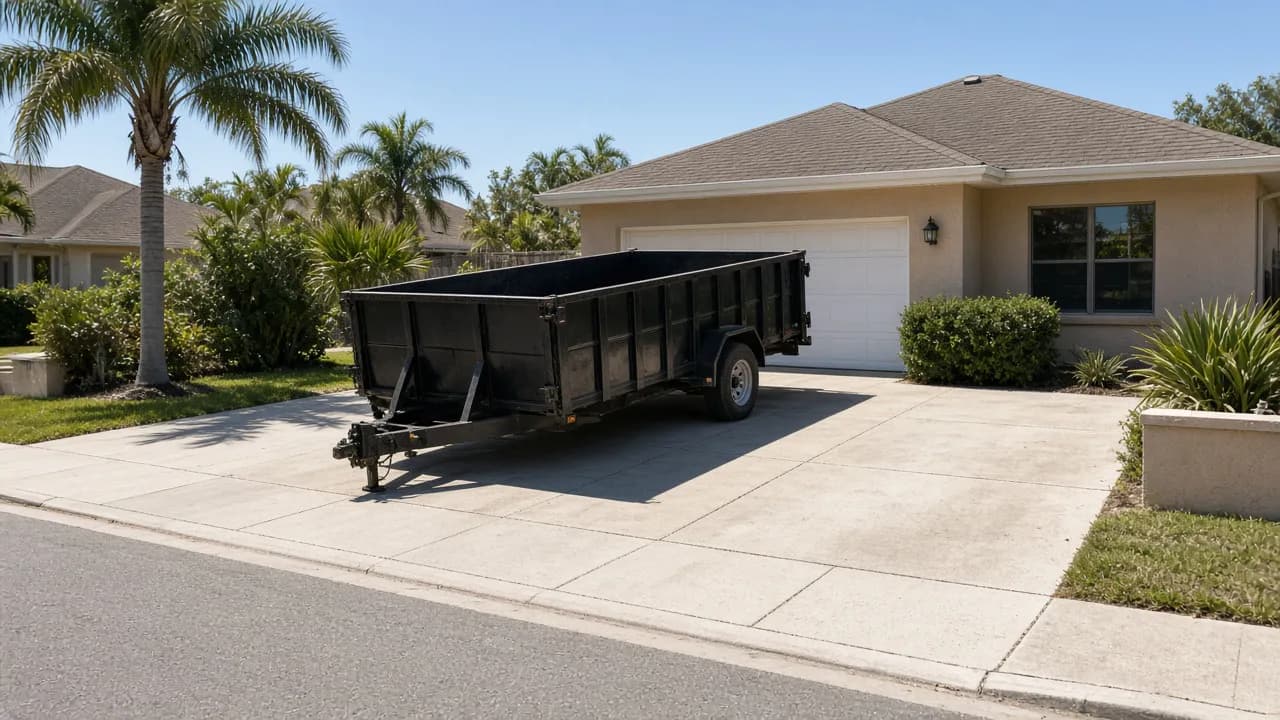
- On the driveway, as close to the house as possible. Ideally right under the eave the crew is working from.
- Clear overhead. Watch for power lines, low oak branches, and palm fronds.
- Room for us to back in and pull out. Move cars, boats, and trailers out of the way the day of delivery.
- Not on the grass if you can avoid it. Florida's sandy soil can soften after rain, and a loaded trailer is heavy.
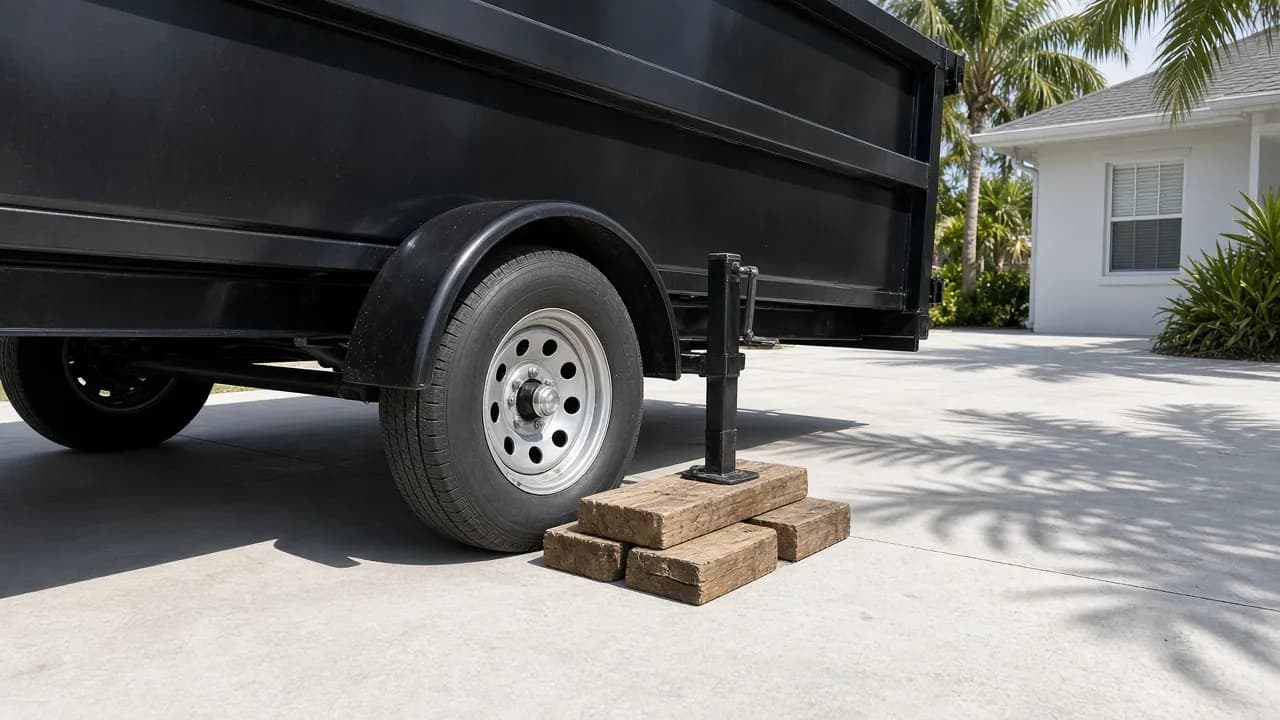
We set every trailer on protective boards to help keep your driveway safe. If you need to place it on the street, check with your county or city about whether a permit is required. In Pasco County, you can reach the county permitting office at (727) 847-8032. Most driveway placements don't need one, but HOAs sometimes have their own rules, so ask yours too.
Tarps, Nails, and Protecting Your Property
Roofing debris is messy. A little prep keeps it off your lawn, landscaping, and pool.
Use tarps generously
Lay tarps along the foundation, over shrubs, and across any flower beds below the work area. Many roofers bring their own, but it doesn't hurt to ask. If you have a pool or lanai screen nearby, cover what you can and keep the pool cover on.
At the end of each day, a tarp over the dumpster keeps rain out of the load. That matters for the weight reasons above.
Sweep for nails with a magnet
Thousands of roofing nails come off with the shingles, and some always end up in the yard and driveway. A rolling magnetic sweeper is the easiest fix. Ask your roofer to run one at the end of each day and again after cleanup. It's worth doing a final pass yourself, especially along the driveway, in the grass where kids or pets play, and near where the dumpster sat.
Nails in tires are no fun, and neither is stepping on one barefoot.
Timing Your Roof Replacement Around Florida Weather
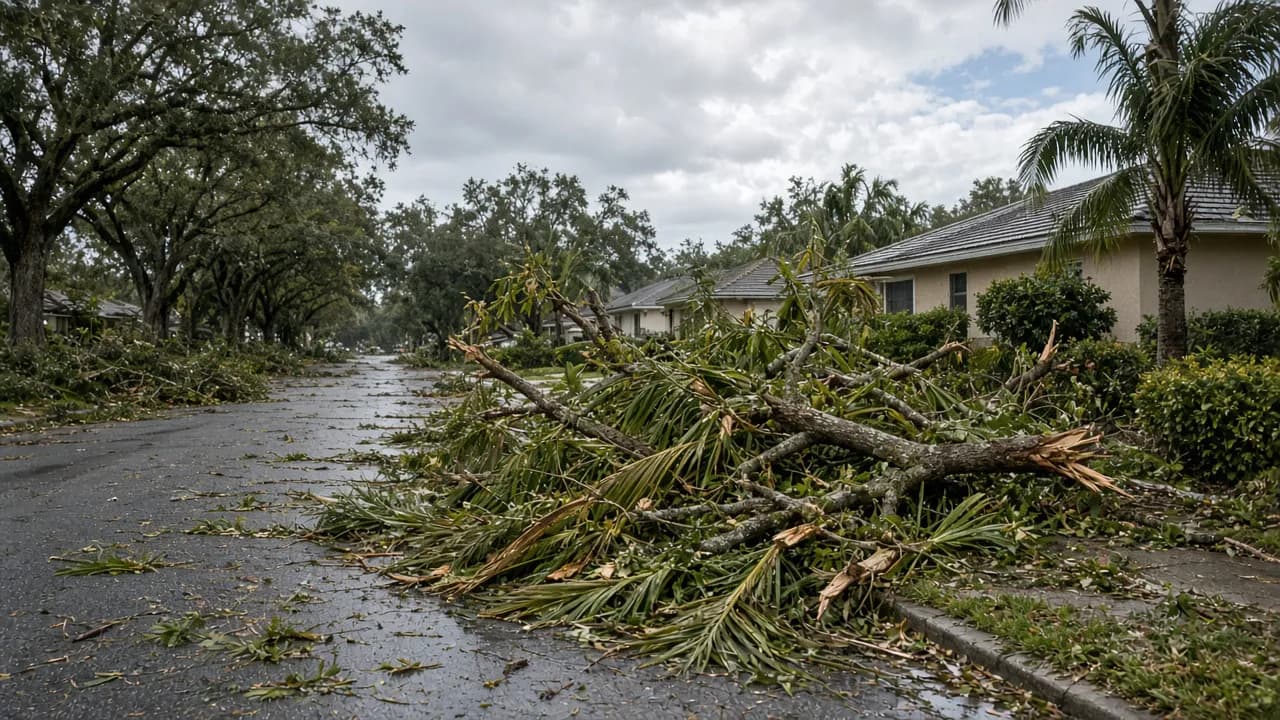
In Tampa Bay, the summer rainy season brings afternoon thunderstorms most days, and hurricane season runs from June 1 through November 30. Neither is great for having your roof open.
A few tips:
- Aim for drier months if you can. Many homeowners schedule roofs from late fall through spring, when storms are less frequent. That's also busy season for snowbirds, so book your roofer early.
- Work in sections. If the job has to happen in summer, a good crew tears off and dries in one section at a time so the house is never wide open when a storm rolls in.
- Start early in the day. Mornings are usually drier and cooler than afternoons.
- Plan delivery for the day before. Having the dumpster on site before the crew arrives means no waiting once tear-off starts.
- Schedule pickup promptly. Once the last shingles are in, call or text and we'll haul it away. A loaded dumpster sitting through a week of rain only gets heavier.
If a named storm is in the forecast, talk with your roofer about pausing the job and securing everything, including the dumpster's contents.
What Can Go in a Roofing Dumpster
Roofing shingles are on our accepted list, along with the other debris a tear-off produces:
- Asphalt shingles and ridge caps
- Felt paper and synthetic underlayment
- Drip edge and flashing
- Old plywood or OSB decking
- Gutters and downspouts
- Packaging from the new materials
Keep out hazardous chemicals and solvents, wet paint, tires, batteries, and propane tanks. Leftover roofing cement or sealant cans should be handled separately, so check your county's household hazardous waste options. For a full list of what we take, see our construction dumpster rental page.
DIY Roof vs. Hiring a Roofer
If you're a contractor or doing a small roof yourself, you'll be booking the dumpster directly. If you've hired a roofer, ask whether disposal is in their bid. Some include it; others expect the homeowner to provide a dumpster. Renting it yourself gives you control over the timing and placement, and you can toss other junk into any leftover weight allowance once the roofing is done.
Not sure which approach makes sense for your project? Our guide on how to rent a dumpster walks through the basics.
Book Your Roofing Dumpster
Ready to schedule? Call or text (727) 317-6717 with your roof details, or check sizes and flat rates on our pricing page. We serve New Port Richey, Holiday, and communities across Pasco, Pinellas, Hillsborough, and Hernando counties.
Frequently Asked Questions
What size dumpster do I need for a roof replacement?
Pick by weight, not just volume. Shingles are heavy, so the 20-yard ($500, 4 tons included) is the usual pick for a full tear-off on a typical house. Smaller roofs or single-layer jobs may fit a 15-yard ($400, 3 tons included). Call with your roof details and we'll help you choose.
Can I put roofing shingles in a Lupo dumpster?
Yes. Roofing shingles are on our accepted list, along with the underlayment, flashing, and old decking that come off during a tear-off. Keep out wet paint, solvents, tires, batteries, and propane tanks.
Where should the dumpster go during a roof tear-off?
As close to the house as the driveway allows, ideally right under the roof edge where the crew is working. We set it on protective boards so your driveway stays safe.
When is the best time to replace a roof in Florida?
Many homeowners aim for the drier months, roughly late fall through spring, to avoid daily summer storms and hurricane season. If you have to work in summer, plan to tear off and dry-in one section at a time and keep tarps on hand.