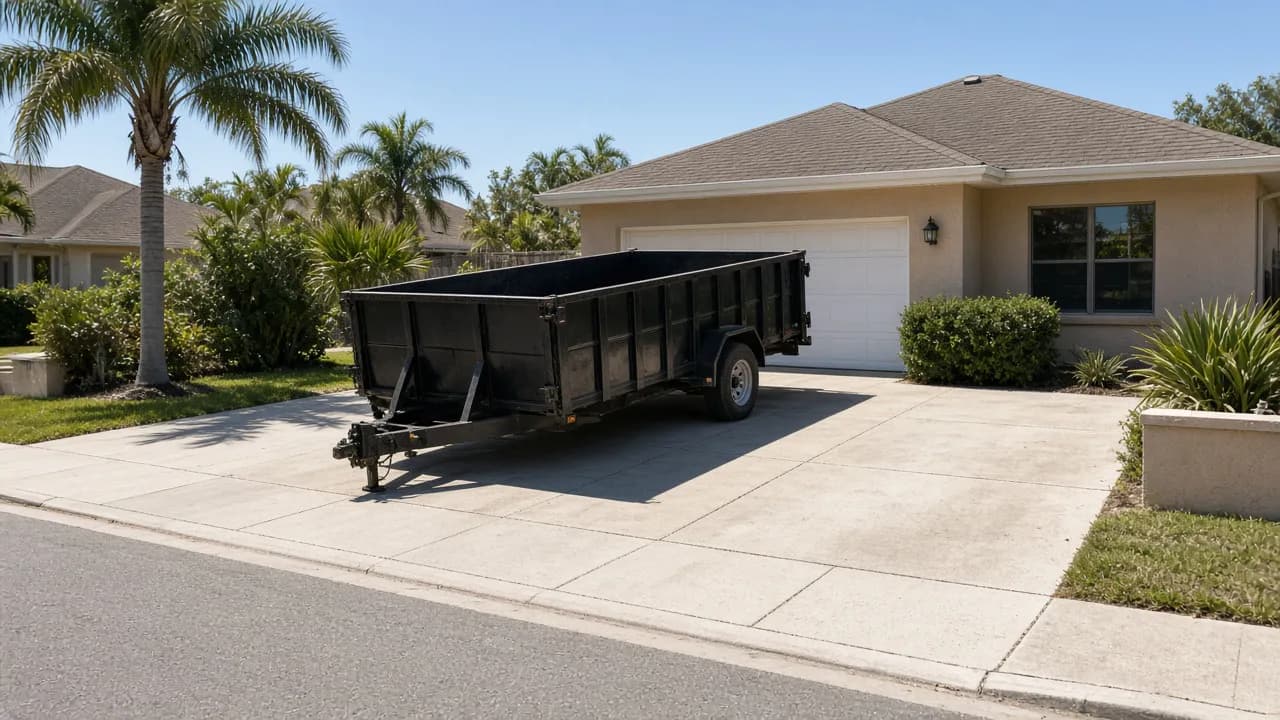

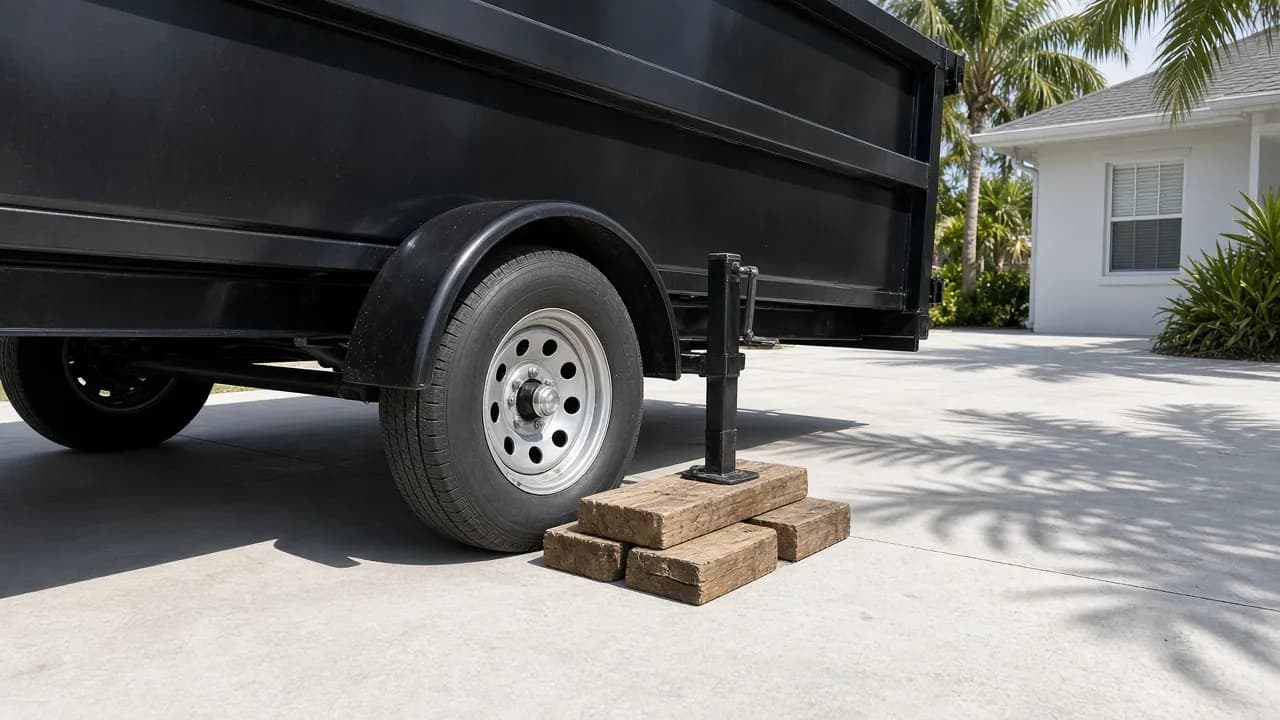
Quick answer: Will a dumpster damage my driveway? Usually not, if it's placed on a sound surface and the weight is spread out. Lupo sets every dumpster on protective boards to spread the weight and keep it off your concrete or pavers. Use extra care with pavers, cracked slabs, and fresh concrete, and make sure there's room for the truck and trailer to get in.
It's one of the most common questions we hear, and a fair one. Your driveway isn't cheap to replace. Here's what actually affects the risk, why dump trailers tend to be easier on driveways, and how to pick the right spot.
Will a Dumpster Damage My Driveway? What Affects the Risk
A few things decide whether a driveway comes through a rental looking the same as before:
- How the weight is spread. Weight concentrated on a few small points is harder on a surface than weight spread across boards.
- The condition of the driveway. Existing cracks, sunken spots, and loose pavers are where problems tend to start.
- How the dumpster is delivered. A heavy truck dropping a steel box is a different load than a trailer rolling in.
- How full and how heavy it gets. A trailer full of tile weighs far more than one full of furniture.
- What's under and around it. Sprinkler lines, septic systems, and soft edges near the lawn all matter.
How Lupo Protects Your Driveway
Every Lupo dumpster is a low-profile dump trailer, not a roll-off box. We back it into your driveway behind a pickup truck and set it on protective boards. The boards help spread the weight and keep the trailer off your concrete or pavers.
When you book, tell us exactly where on the driveway you want it. We'll position it carefully and talk through anything that looks like a concern.
Why Dump Trailers Are Easier on Driveways Than Roll-Offs
Traditional roll-off dumpsters are steel boxes delivered by a large truck. The truck tilts its bed and slides the box off onto the ground, and the box rests on steel rails or small wheels. That's a lot of weight in a few spots, from both the truck and the box.
A dumpster trailer works differently:
- It's towed in by a pickup, not a heavy roll-off truck.
- It sits low on its own wheels, with the weight spread across the tires and boards.
- There's no sliding or dropping. It rolls into place.
- Pickup is the same in reverse. We hitch up and tow it away.
It's not a magic shield. A heavy load is still a heavy load. But it's a gentler setup for a typical residential driveway.
Driveway Surfaces: What to Know
| Surface | Generally OK? | What to watch for |
|---|---|---|
| Concrete in good shape | Yes | Existing cracks, especially near edges |
| Pavers | Usually | Loose or sunken pavers, weak edge restraints, soft sand base |
| Asphalt | Usually | Softening on very hot afternoons; older, thin asphalt |
| Fresh concrete | Wait | Ask your contractor when it's ready for heavy vehicles |
| Gravel or shell | Often | Soft spots and ruts after heavy rain |
| Grass or sand | Case by case | Sinking and ruts, especially in the summer rainy season; buried lines |
Pavers
Pavers are popular around Pasco County, and they hold up well in most cases. The risk is in the base. Pavers sit on a bed of sand, and if that base is weak or the edge restraints are failing, heavy weight can cause them to shift or settle.
If your pavers already rock when you step on them, or there are low spots where water collects, tell us before delivery. We may suggest a different spot on the driveway.
Fresh Concrete
New concrete needs time to gain strength. If you've just poured a new driveway, or you're getting one as part of the project, ask your concrete contractor when it can handle heavy vehicles. Until then, it's better to place the dumpster somewhere else.
Older Driveways and Existing Cracks
Many older homes in New Port Richey and Holiday have driveways with a few decades of settling and cracks. That doesn't rule out a dumpster, but those weak spots are where you'd see trouble first. Point them out when you book, and we'll steer around them where we can.
Lawn and Sandy Soil
Florida's sandy soil can get soft fast, especially during summer afternoon storms. A loaded trailer on the lawn can sink and leave ruts. Placing it on the grass also puts it near sprinkler heads, irrigation lines, and septic drainfields. Pavement is almost always the better choice.
Placement Tips to Protect Your Driveway
- Choose a flat, solid spot. Level pavement is ideal.
- Point out problem areas. Cracks, loose pavers, and soft edges are worth mentioning before we back in.
- Mark what's underground. Let us know about sprinkler lines, septic tanks, or drainfields near the drop area.
- Think about loading. Put the trailer where you can reach it easily so you're not dragging debris across the driveway.
- Load evenly. Spread heavy debris like tile, concrete, or roofing shingles across the floor of the trailer rather than piling it at one end.
- Respect the weight limit. The 10-yard includes 2 tons, the 15-yard 3 tons, and the 20-yard 4 tons. Staying under it is easier on the trailer and your driveway.
Our rental terms explain how responsibility works for surfaces not suited to the weight and for anything underground in the drop area.
Check Overhead and Access Clearance
Driveway damage isn't the only thing to think about. The truck and trailer need room to get in and out:
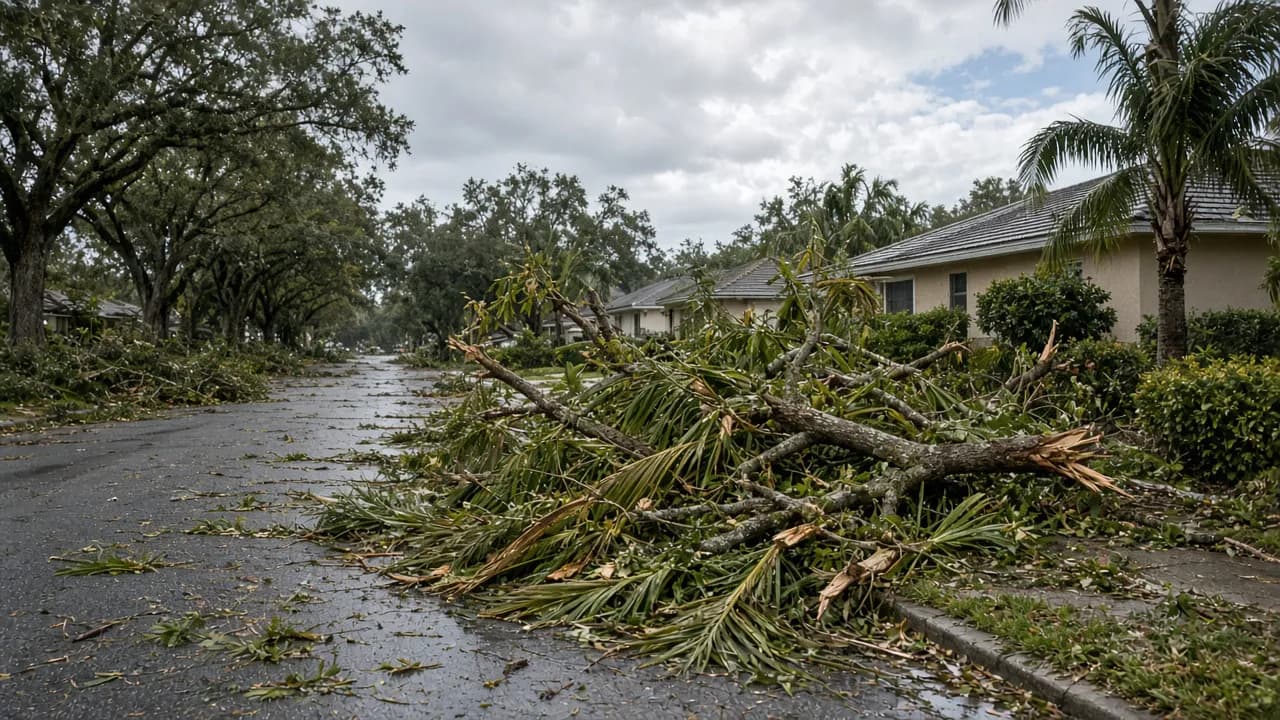
- Low branches. Oak limbs and palm fronds over the driveway can scrape the truck or trailer. Trim them back if they hang low.
- Power and cable lines. Look for low wires over the driveway or along the path in.
- Gutters and eaves. If the trailer will sit close to the house, check that nothing hangs over the spot.
- Width. Our trailers are 8 feet wide. Make sure gates, mailboxes, and parked cars leave room to back in.
- Length. The 10-yard is 12' long and the 20-yard is 16'. Measure the space you have.
If you're not sure, send us a photo of the driveway when you book.
The Bottom Line
A dumpster on a sound driveway, set on protective boards and loaded evenly, usually leaves the driveway the way it found it. Take extra care with pavers, older cracked slabs, and new concrete, and keep it off soft ground when you can. If you also need to know whether you need a street permit, our Pasco County dumpster permit guide covers it.
Book a Driveway-Friendly Dumpster
Lupo is a family business based in Holiday, serving New Port Richey and all of Pasco County. Flat-rate dumpsters start at $325 with delivery, pickup, and disposal up to the weight limit included, and we can often deliver the same day. Call or text (727) 317-6717, or pick your size on our pricing page.
Frequently Asked Questions
Will a dumpster damage my driveway?
A properly placed dumpster on a sound driveway usually doesn't cause damage. Lupo sets every dumpster on protective boards to spread the weight and keep it off your concrete or pavers.
Can you put a dumpster on pavers?
Usually, yes. Pavers sit on a sand base, so they can shift if the base is weak or the edges aren't restrained. Protective boards help spread the load. If your pavers already wobble or sink, tell us before delivery.
How long should new concrete cure before a dumpster goes on it?
Ask your concrete contractor. New concrete gains strength over several weeks, so it's best to wait until they say it's ready for heavy vehicles, or place the dumpster somewhere else.
Is a dump trailer easier on a driveway than a roll-off?
Generally, yes. A dump trailer is towed in behind a pickup and sits low on its own wheels, while a roll-off is a steel box dropped from a large truck. Either way, protective boards and good placement matter.