
Quick answer: Storm debris cleanup after a hurricane starts with safety: stay away from downed power lines and be careful with chainsaws. Next, photograph all damage for insurance before you move anything. Then sort debris the way your county asks for curbside storm pickup, or rent a dumpster or book yard waste removal if you'd rather clear it on your own schedule.
Storm Debris Cleanup Starts With Safety
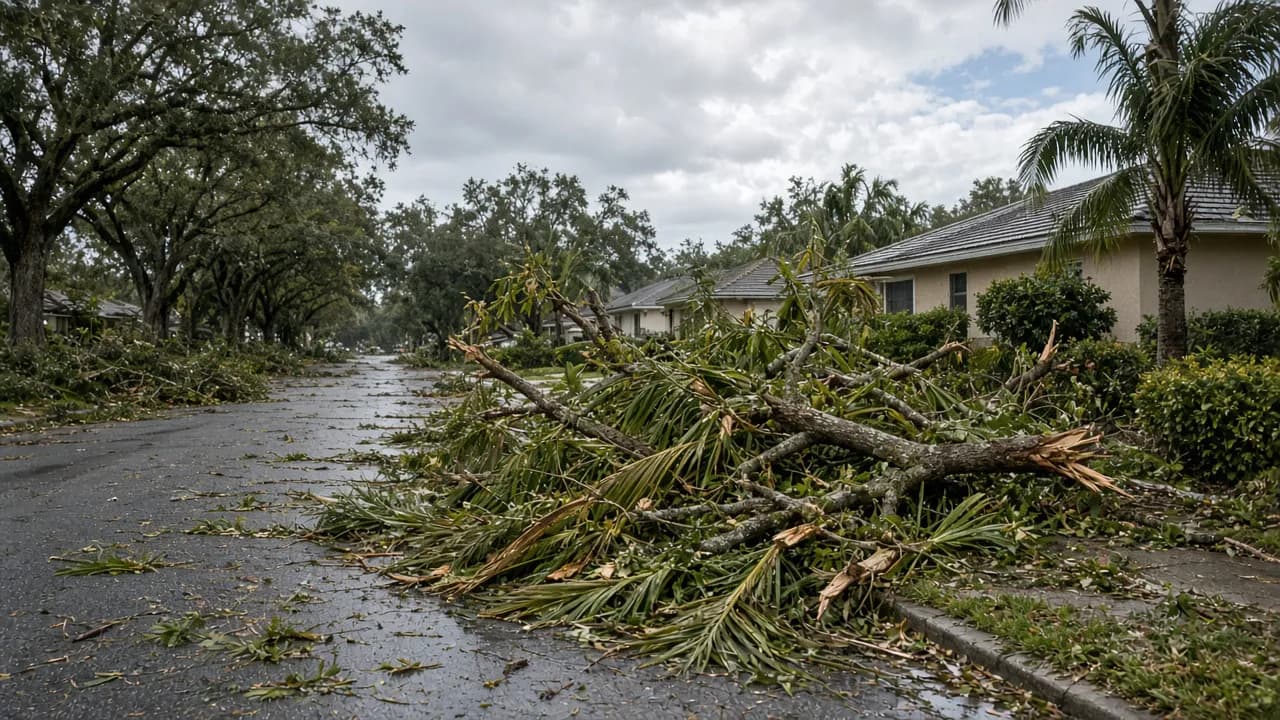
After a hurricane or tropical storm rolls through Pasco County and Tampa Bay, it's tempting to get outside and start dragging branches right away. Slow down first. Cleanup comes with its own hazards.
Stay away from downed power lines
- Treat every downed line as live. Stay well back and keep kids and pets away.
- Don't touch branches, fences, or puddles that are in contact with a line.
- Report downed lines to your electric utility right away.
- Watch for hidden lines tangled in fallen trees and piles of debris.
Use chainsaws carefully
Fallen oak limbs are heavy and often under tension. When you cut them, they can spring or roll.
- Wear eye and ear protection, gloves, long pants, and sturdy boots.
- Read the manual and only cut what you're comfortable with.
- Never cut above shoulder height or while standing on a ladder.
- Watch for limbs that are bent or pinned. They can snap back when cut.
- Leave trees on the house, near power lines, or leaning dangerously to a professional.
Watch out for the heat and water
Post-storm Florida is hot, humid, and often without power. Drink plenty of water, take breaks in the shade, and work early in the morning. Watch for standing water, which can hide nails, broken glass, and holes. And keep an eye out for snakes, fire ants, and other critters displaced by flooding.
Run generators outside only
If you're using a generator, keep it outdoors and well away from windows and doors. Carbon monoxide can build up quickly.
Photograph Damage Before You Clean Up
Before you move a single branch, document everything. Your insurance company will want to see the damage as it was.
- Take photos and video of the outside of your home: roof, siding, windows, fences, pool cage, and lanai.
- Capture the inside too: water stains, wet carpet, damaged furniture.
- Get wide shots and close-ups so the scale is clear.
- Photograph debris piles before they're picked up, especially damaged building materials.
- Keep receipts for tarps, chainsaw rentals, dumpsters, and any other cleanup costs.
Once you've documented everything, contact your insurance company and ask what they need before you throw out damaged items. Some insurers may want to see certain items in person.
Sorting Storm Debris for Curbside Pickup
After a major storm, counties in the Tampa Bay area often run curbside storm debris collection. The details change from storm to storm, so follow your county's instructions for your area. Check your county's website, local news, or social media pages for the current rules.
Counties usually ask residents to separate debris into piles by type. Here's how that typically breaks down:
| Debris type | Examples | Notes |
|---|---|---|
| Vegetative debris | Branches, oak limbs, palm fronds, leaves, logs | Often the largest pile after a storm |
| Construction and demolition debris | Drywall, carpet, roofing, fencing, lumber, furniture | Common after flooding or roof damage |
| Appliances | Refrigerators, washers, AC units | Empty fridges and freezers of food first |
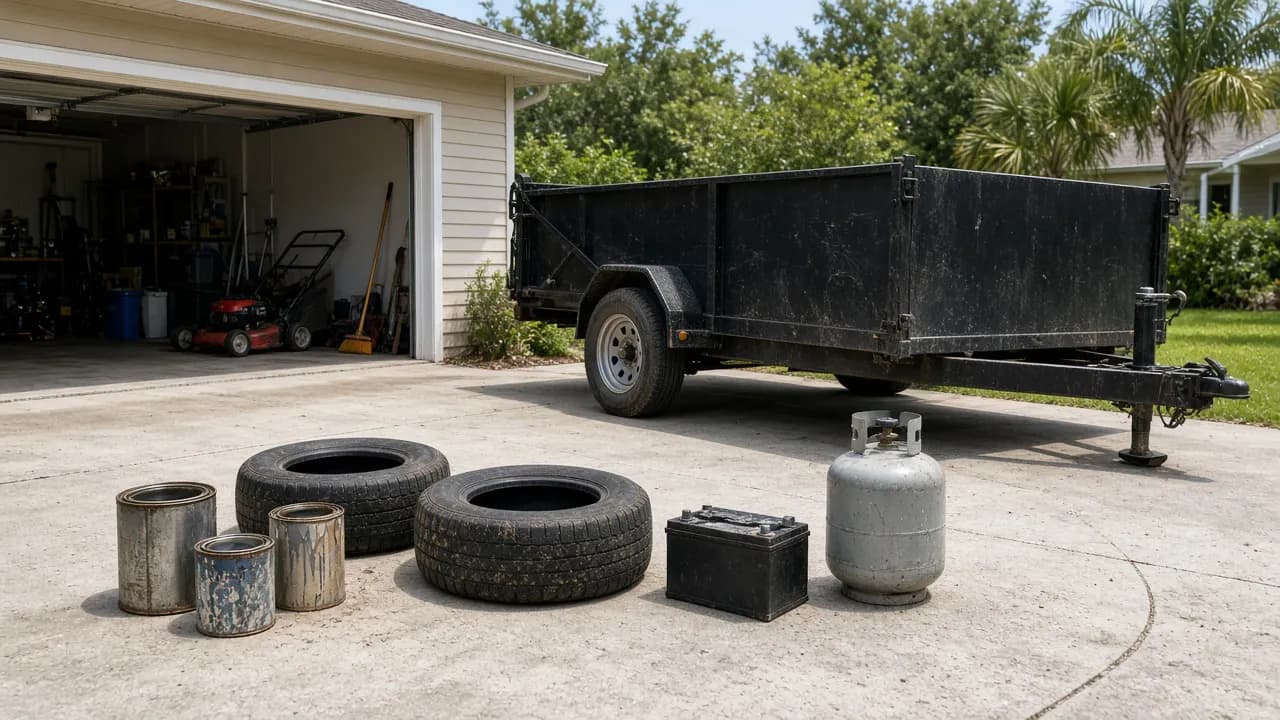
| Household hazardous waste | Paint, chemicals, pool supplies, batteries | Usually collected separately |
| Electronics | TVs, computers | Often their own pile |
| Normal household trash | Bagged garbage | Goes out with regular trash, not storm debris |
Tips for curbside piles:
- Don't block the road, sidewalks, or storm drains.
- Keep piles away from mailboxes, fire hydrants, power lines, and utility boxes.
- Don't bag vegetative debris unless your county says to.
- Be patient. After a big storm, curbside pickup can take a while.
When to Rent a Dumpster for Storm Debris
Curbside pickup works for a lot of people. But there are times when a dumpster makes more sense.
You have a lot of debris
A big oak tree coming down can fill a yard. If your pile is bigger than you want sitting at the curb, a dumpster gets it off your property.
You don't want to wait
Curbside storm collection can take time. A dumpster lets you clear the debris on your own schedule. After a storm, demand is high everywhere, so book as soon as you can. We can often deliver the same day, depending on conditions and our schedule.
You're doing repairs
Water-damaged drywall, wet carpet, roofing materials, and broken fencing pile up fast during repairs. A 20-yard dumpster at $500 handles whole-home tear-outs and roofing jobs with 4 tons included.
Your HOA wants the street clear
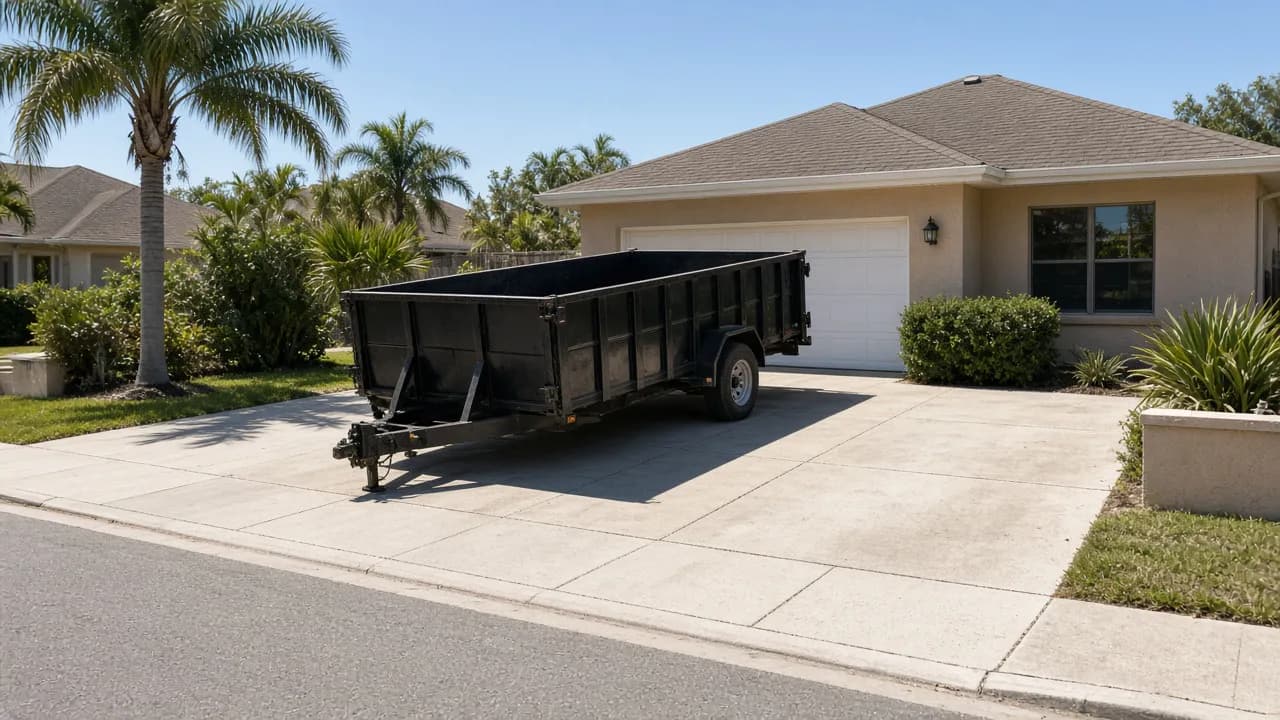
Some communities in Trinity, Wesley Chapel, and Land O' Lakes have rules about how long debris can sit at the curb. A dumpster in the driveway can keep things tidy while you work. Check with your HOA first.
Which size for storm cleanup?
- 10-yard ($325, 2 tons): Branches and fronds from a few downed limbs, or a small fence section.
- 15-yard ($400, 3 tons): A larger yard cleanup, or flood-damaged flooring and drywall from a room or two.
- 20-yard ($500, 4 tons): A whole tree, roof tear-off, or multi-room water damage.
Wet debris is heavy. Soaked branches, waterlogged carpet, and wet drywall weigh more than dry, so keep the weight limit in mind. Keep prohibited items out of your dumpster. See our guide on what can't go in a dumpster.
When to Call for Removal Instead
If you can't safely do the work yourself, or you just don't have the time, our crew can handle it. With yard waste removal, we load the branches, fronds, and storm debris by hand and haul it away. You don't need to bundle it or cut it to the curbside length. Send a photo of the pile and we'll give you a firm price.
For damaged building materials, our construction debris removal crew can clear it out. Not sure which way to go? Our dumpster rental vs junk removal guide walks through the choice.
Get Ready Before the Next Storm
Hurricane season runs June 1 through November 30. A few things you can do ahead of time:
- Trim dead limbs and loose palm fronds before storm season.
- Clear out the garage so you have room to store outdoor furniture.
- Save our number so you're not searching for it after the power goes out.
Get Help With Storm Debris Cleanup
When the storm passes, we're here to help Pasco County clean up. Call or text (727) 317-6717, see sizes on our dumpster rental pricing page, or book yard waste removal. We serve New Port Richey, Holiday, Hudson, and the surrounding Tampa Bay area.
Frequently Asked Questions
Should I take photos before cleaning up storm debris?
Yes. Photograph and video the damage to your home, roof, fence, and belongings before you move anything, and keep receipts for cleanup costs. Then check with your insurance company about what they need.
How do I set out storm debris for county pickup?
Follow your county's instructions. Counties usually ask you to separate debris into piles by type, such as vegetation, construction debris, appliances, and hazardous waste, and keep piles clear of mailboxes, hydrants, and power lines.
When should I rent a dumpster after a storm?
Rent a dumpster when you have more debris than you want to leave at the curb, need to clear it on your own schedule, or have damaged building materials from a repair. A 10-yard is $325 and a 20-yard is $500, flat.
Can I put fallen branches and palm fronds in a dumpster?
Yes. Yard waste, branches, and palm fronds can go in a Lupo dumpster. Wet debris is heavy, so keep the weight limit in mind and tell us what you're loading when you book.