
Quick answer: The best hoarding cleanup help starts with the relationship, not the stuff. Talk calmly, focus on safety, and agree on small wins, like one clear path or one usable room. Bring in a therapist or professional organizer for support, and use a respectful cleanup crew for the heavy lifting. Your loved one should stay involved in decisions whenever possible.
If someone you love is living in a home that's become overwhelming, you've probably felt a mix of worry, frustration, and helplessness. Maybe you've tried to help before and it ended in an argument. Maybe you're not sure where to begin at all.
You're not alone, and you don't have to have all the answers. This guide walks through a gentle, practical approach that families in Pasco County and across Florida can use.
Start With the Relationship, Not the Stuff
It's tempting to lead with the clutter. But for the person living there, those things often carry memories, meaning, or a sense of security. Leading with "this all has to go" usually leads to defensiveness.
A better starting point:
- Pick a calm moment. Not during a holiday visit, not after a fall, not in front of other people.
- Talk about them, not the house. "I worry about you tripping on the stairs" lands better than "this place is a mess."
- Listen more than you talk. Ask what feels hard. Ask what they'd want if things were easier.
- Skip the labels. Words like "hoarder" or "junk" tend to shut the conversation down.
- Don't do a surprise cleanout. Clearing things out while someone is away can damage trust and often doesn't last.
You may need more than one conversation. That's normal. Progress here is measured in trust as much as in cleared floor space.
Focus on Small Wins
Big, all-at-once cleanups can feel like a loss of control. Small steps your loved one agrees to tend to feel safer and stick better.
Good first goals might be:
- A clear path from the bed to the bathroom
- A clear path to each exterior door
- One usable chair at the kitchen table
- A working stove and countertop
- One room that's fully usable again
Celebrate each one. When someone sees that letting go of a few things made life easier, the next step often feels less scary.
Address Safety Issues First
Some problems can't wait. If any of these are present, they're worth putting at the top of the list, and gently explaining why:
| Safety concern | What to look for | Why it matters |
|---|---|---|
| Blocked exits | Doors or hallways that can't be fully opened or walked through | Getting out quickly in a fire or emergency |
| Fire risk | Paper, boxes, or fabric near the stove, space heaters, or outlets | Clutter can catch and spread fire fast |
| Trips and falls | Narrow paths, stacked items, loose bags on the floor | Especially risky for older adults |
| Humidity and mold | Musty smells, stained ceilings, damp boxes | Florida heat and humidity make this worse |
| Pests | Droppings, chewed paper, insects | Can affect health and the home itself |
| Hurricane prep | Cluttered yard, lanai, or garage; blocked windows | Loose items can become debris; evacuation needs clear paths |
Hurricane season runs June 1 through November 30, and that can be a helpful, non-judgmental reason to talk about clearing exits and the yard. "Let's make sure you can get out quickly if there's a storm" focuses on their safety, not on their belongings.
If there are signs of biohazards, like bodily fluids, heavy mold, or significant animal waste, that part needs a specialized cleanup company. A general junk removal crew isn't the right fit for it.
Bring In the Right Support
You don't have to be the therapist, the organizer, and the moving crew all at once. Different people can help with different parts:
- A therapist or counselor who has experience with hoarding can help your loved one work through the emotional side of letting go. Their doctor may be a good place to ask for a referral.
- A professional organizer can help set up systems for sorting and keeping things manageable afterward.
- Family and trusted friends can share the load, especially if you live out of town.
- A cleanup crew handles the heavy lifting and hauling, so the family can focus on decisions instead of carrying furniture.
If your loved one is open to it, let them choose who's involved. Feeling some control over the process matters.
The Cleanup Itself
Once there's agreement on a plan, the hands-on work can begin.
Agree on What to Look For
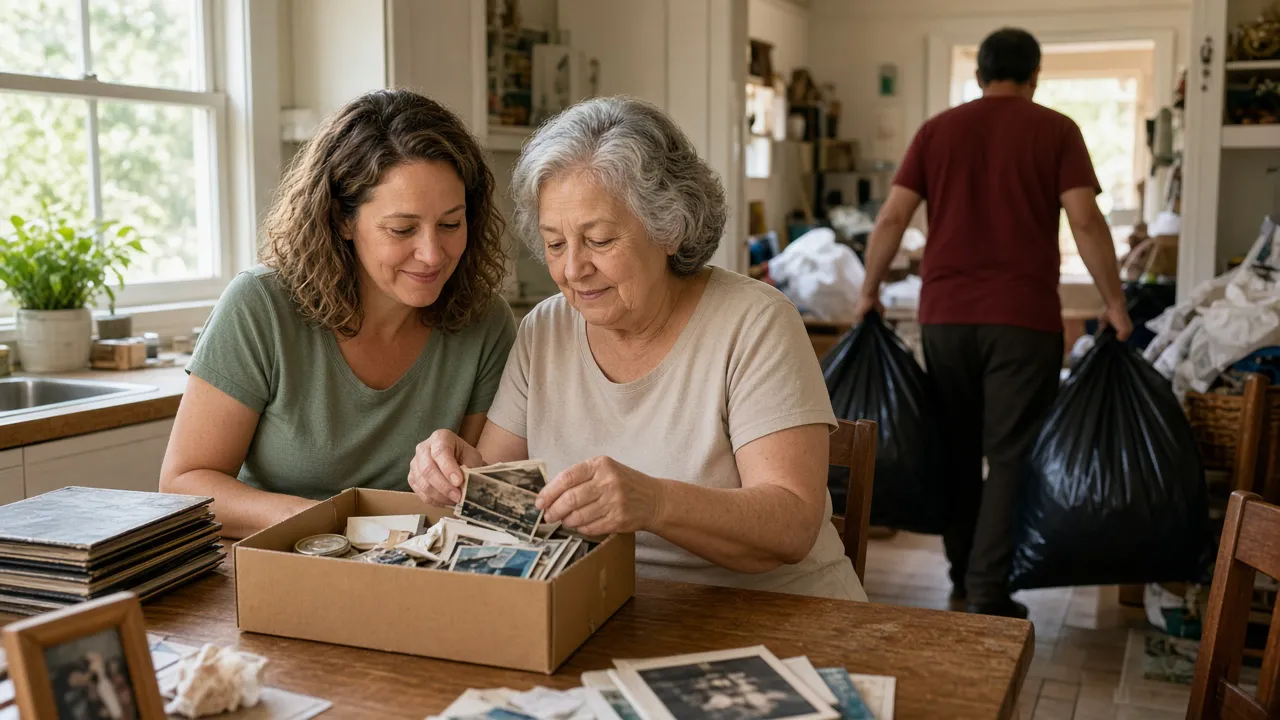
Before anything moves, make a list of things to set aside: photos, important papers, cash, jewelry, keepsakes, and anything your loved one has named as special. A good cleanup crew will set these aside for you to review instead of tossing them.
Work Room by Room
Pick one area and finish it before moving to the next. It's easier to see progress, and it keeps the rest of the home stable while you work.
Use Simple Sorting
Three piles are usually enough: keep, donate, and toss. Too many categories slow things down and make decisions harder.
Choose Your Hauling Option
There are two common ways to handle what's leaving:
- Full-service cleanup. Our hoarding cleanup crew works with your family at your pace, sets keepsakes aside, and hauls everything away. You get a firm price before any work begins, based on a walkthrough or photos.
- A dumpster for families doing the work. If your family wants to sort and load at its own pace, a 20-yard dumpster gives you room for a full property cleanout. It sits in the driveway on protective boards until you call for pickup.
Some families do a mix: the crew handles the heavy furniture and appliances, and the family sorts personal belongings over a few weekends. Our furniture removal and junk removal services can help with the big pieces.
Keep It Private
Many families worry about neighbors watching. Ask any crew you hire how they handle privacy. At Lupo, we keep the work quiet, don't comment on the home, and don't share details with anyone.
After the Cleanup
Clearing a home is a big step, but it isn't the finish line. Keep visiting. Keep the relationship warm. Ongoing support from a therapist or organizer can make a real difference in keeping the space livable.
If the home was cleared because of a move, a sale, or a loss, our guide to estate cleanouts covers the next steps.
Help Is Here When You're Ready
Lupo is a family business based in Holiday, helping families across Pasco County, from New Port Richey to Zephyrhills. We'll listen first, make a plan with you, and move at your family's pace. If you're in or near New Port Richey, see our local hoarding cleanup page. Call or text (727) 317-6717, or reach out privately through our contact page.
Frequently Asked Questions
How do I start a conversation about hoarding with a loved one?
Start with the relationship, not the stuff. Pick a calm moment, talk about their safety and comfort, and listen more than you speak. Avoid ultimatums, labels, or surprise cleanups.
Should we clear everything out at once?
Usually not, unless there's a safety emergency or a firm deadline. Small, agreed-upon steps, like clearing one path or one room, tend to go better and are more likely to last.
What does a hoarding cleanup cost?
It depends on the size of the home, how full it is, and how much sorting you want. Lupo walks through it with you, in person or by photos, and gives you a firm price before any work begins. Learn more on our hoarding cleanup page.
Does Lupo handle biohazards?
No. If a home has biohazards like bodily fluids, heavy mold, or significant animal waste, we'll recommend a specialized cleanup company for that part and clear out the rest once it's safe.